Nvidia Q4 Earnings: All Eyes on April and the Blackwell Obsession
As the Q4 earnings season draws to a close, one company consistently captures the market's full, unwavering attention: Nvidia ($NVDA). This isn't just another quarterly report; it's become a high-stakes referendum on the trajectory of the AI revolution itself. In a landscape where "good" quarters are mere background noise and "great" quarters are deemed predictable, Wall Street is demanding an unprecedented narrative of acceleration from Nvidia. Our primary focus today, the crucial nvidia earnings prediction, is less about hitting a number and more about painting a future.
The semiconductor giant's Q4 results are due, and the market has already baked in an expectation of brilliance, fireworks, and record-breaking performance. But even with these lofty assumptions, the burning question remains: Can Nvidia not only meet but dramatically exceed these sky-high expectations, particularly in its forward guidance, margin projections, and the cadence of its next product cycles? This report isn't just about the past three months; it's about setting the stage for the next phase of AI dominance.
The Unrelenting Expectations Treadmill: A New Standard for Nvidia Earnings Prediction
The paradigm for evaluating tech earnings has fundamentally shifted, and Nvidia is at the epicenter of this evolution. Where once a solid quarter and a hint of momentum sufficed, investors now demand a relentless march of innovation and growth. For Nvidia, this means the bar is constantly being raised, often faster than the company can bring its cutting-edge products to market. This unique pressure cooker defines the current nvidia earnings prediction landscape.
Analysts are anticipating an enormous Q4. Zacks Consensus Estimates peg Nvidia's fiscal Q4 2026 sales at a staggering $65.56 billion, representing a phenomenal 66.7% year-over-year increase. Earnings per share (EPS) are projected to hit $1.52, a remarkable 70.8% jump from the previous year. These figures, by any traditional measure, are colossal. Yet, Nvidia finds itself in a peculiar modern bind: delivering numbers this pristine and massive might still elicit little more than a shrug from a market that has already priced in such spectacular success. As investors increasingly expect a continuous escalation of performance, a beat can feel less like an upside surprise and more like a mere confirmation of the obvious. For a deeper dive into this phenomenon, read Nvidia's Q4 Challenge: Why Monster Earnings Might Still Disappoint.
Options traders are already leaning into the prospect of a significant reaction, indicating the widespread belief that this report will be a market mover. However, the emotional range of the stock's response could be as flat as a spreadsheet if the forward narrative doesn't feel like true acceleration. The consensus bull case for Nvidia has become so widely adopted that merely "meeting expectations" is increasingly akin to falling short of the market's imagination.
Beyond Q4: The April Obsession and the Blackwell Revolution
While the Q4 results will capture immediate headlines, the market's true obsession lies not in the rearview mirror but firmly on the road ahead – specifically, what Nvidia's guidance reveals about the upcoming April quarter. The focus has decisively shifted from the reported past to the projected future, making the forward-looking commentary paramount for any meaningful nvidia earnings prediction.
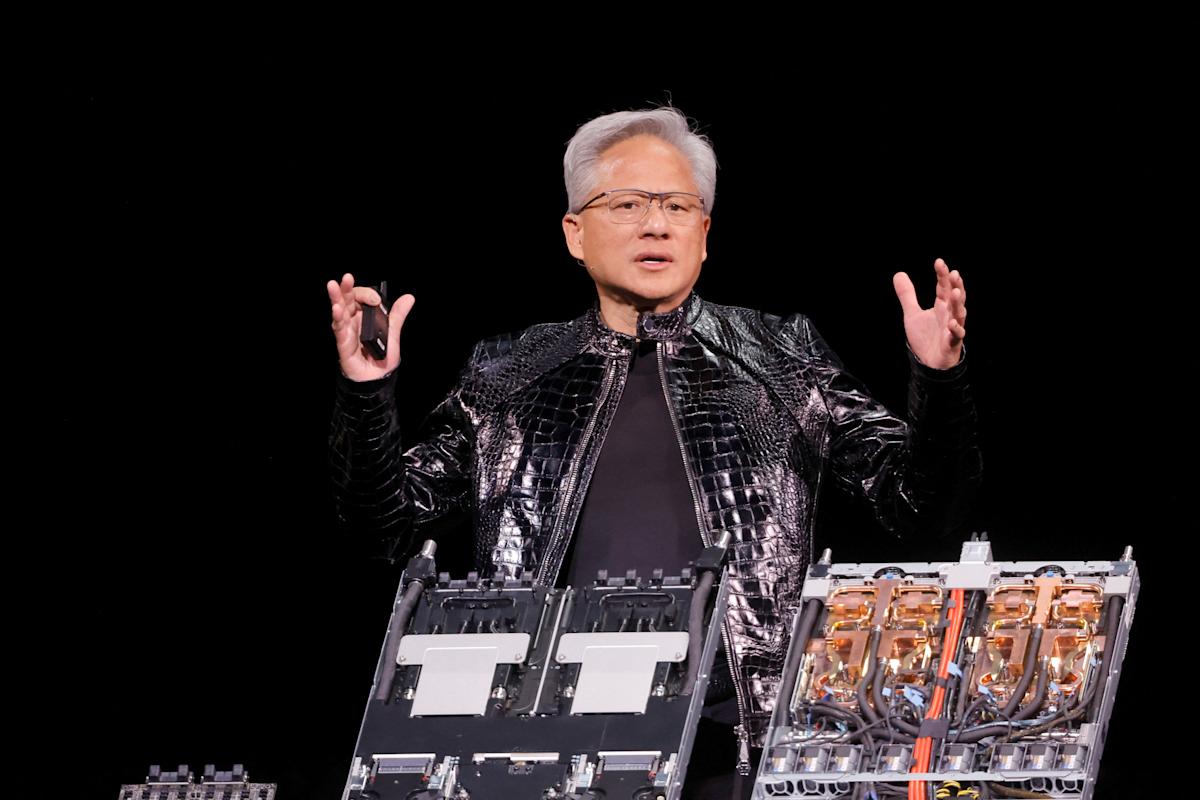
UBS analyst Timothy Arcuri recently noted that "investor expectations for Nvidia’s April quarter likely demand revenue somewhere in the $74 billion-$75 billion range." This isn't just about an incremental increase; it's about sustaining and accelerating a trajectory of hyper-growth. This intense April obsession, of course, directly translates into a palpable "Blackwell obsession." Last quarter, CEO Jensen Huang delivered a potent tagline that perfectly encapsulated the market's excitement: "Blackwell sales are off the charts, and cloud GPUs are sold out."
Blackwell is more than just Nvidia's next-generation GPU architecture; it represents the company's commitment to pushing the boundaries of AI computing. It's the engine poised to power the next wave of AI innovation across data centers, cloud providers, and enterprise solutions. The market is desperate for details on Blackwell's rollout, production ramp-up, and revenue contribution. Any hints of robust demand, efficient manufacturing, and successful deployment will be scrutinized intensely, as Blackwell is seen as critical to maintaining Nvidia's competitive edge and satisfying the insatiable demand for AI infrastructure.
Navigating Market Volatility: What the EPS Dispersion Tells Us
The sheer market weight of Nvidia cannot be overstated. With a substantial 7.8% weighting in the S&P 500, its quarterly reports are treated less like a corporate update and more like a major economic event. When Nvidia moves, it drags money, sentiment, and the major indexes along with it, creating a ripple effect across global markets. This makes an accurate nvidia earnings prediction crucial not just for investors in the company, but for anyone tracking broader market sentiment. This impact is so significant that many refer to it as an AI referendum on the entire market, a concept further explored in Nvidia Q4: The AI Referendum That Could Tug the Entire Market.
The market's underlying nervousness about Nvidia's future growth curve is starkly revealed in the dispersion of EPS estimates for the coming fiscal year. While analysts average $7.76 in earnings per share, the range swings wildly from a low of $6.28 to a high of $9.68. This wide spread is not typical; it signals a market actively debating itself about Nvidia's long-term runway. Is this an extended period of sustained, explosive growth, or are we witnessing the late-cycle sprint of an already dominant player? Marta Norton, a strategist at Empower, highlights this challenge: "Nvidia has been a persistent theme over the past few years, and so it’s hard for Nvidia to surprise when everyone expects it to surprise."
This wide EPS range reflects a fundamental disagreement on key factors: the sustainability of AI demand, the competitive landscape (especially from custom AI chips by cloud providers), the speed of Blackwell's adoption, and Nvidia's ability to maintain its commanding profit margins. For investors, understanding this divergence is key to managing expectations and assessing risk.
Actionable Insights for Investors: What to Watch Beyond the Headlines
For investors aiming to make an informed nvidia earnings prediction, looking beyond the headline revenue and EPS figures is critical. Here are key areas to scrutinize:
- Data Center Revenue & Guidance: This is Nvidia's powerhouse. Look for year-over-year and sequential growth, and pay close attention to the guidance for the next quarter. Commentary on hyperscale cloud provider demand versus enterprise AI deployments will be insightful.
- Gross Margins: Nvidia's impressive margins are a testament to its pricing power and technological lead. Any subtle shifts here could indicate competitive pressure or changes in product mix.
- Blackwell Commentary: Beyond the initial hype, listen for concrete details on production ramp, customer adoption, and the expected revenue contribution timeline. How fast can they scale production to meet demand?
- Supply Chain Health: Given the massive demand for AI chips, any mention of supply constraints or improvements in manufacturing capacity is crucial. Jensen Huang's past comments on supply chain stability have been key market drivers.
- Software & Services Growth: Nvidia's CUDA ecosystem and AI software platforms are sticky and high-margin. Look for updates on their growth and how they reinforce the hardware dominance.
- Capital Expenditure (CapEx) Plans: Increased CapEx could signal aggressive expansion and confidence in long-term demand.
The market's insatiable appetite for AI means that Nvidia is operating under unprecedented scrutiny. While phenomenal growth is expected, the market is primarily seeking evidence of *accelerating* growth and clear visibility into the future, particularly through the lens of Blackwell's potential.
Conclusion
Nvidia's Q4 earnings report is far more than a financial disclosure; it's a pivotal moment that will shape market sentiment for the entire AI sector. While staggering Q4 numbers are virtually priced in, the real test for the nvidia earnings prediction lies in its forward guidance, particularly regarding the April quarter and the highly anticipated Blackwell architecture. The vast dispersion in analysts' future EPS estimates underscores the inherent uncertainty and intense debate surrounding Nvidia's long-term growth trajectory. Investors will be dissecting every word from CEO Jensen Huang, looking for concrete signs that the company can not only maintain its unparalleled dominance but also continue to accelerate its already breakneck pace of innovation and market penetration. As a major index mover, Nvidia's performance and outlook will undoubtedly send ripples across the global financial landscape, making this one of the most closely watched reports of the year.